
News & Events
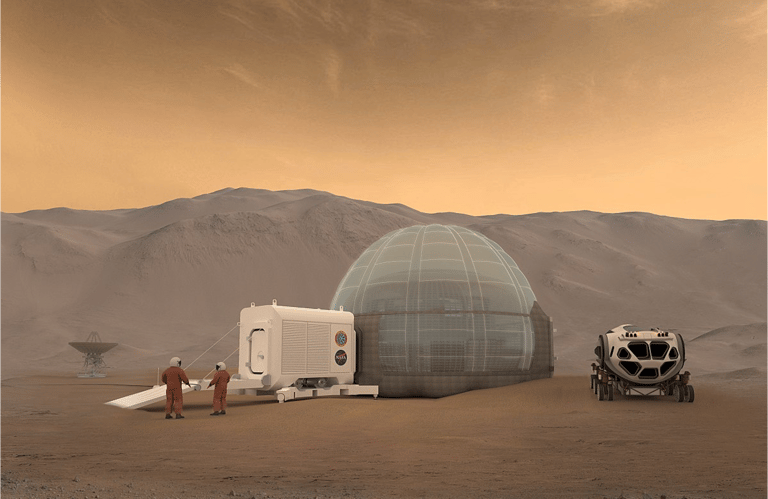
우주과학 학술포럼
주제: 우주탐사, 우주인, 우주산업
Space Exploration, Astronaut, and Space Industries
한국우주인연구원(KIFA)는 2035년 NASA 달,화성 유인탐사선에 대비해 한국최초로 우주환경에서 인간요소에 초점을 맞추어 우주의학, 우주복설계, 우주선디자인, 우주생물학, 우주 정책 및 윤리, 생리학, 우주여행, 우주거주지 하비타, 무중력, 방사선등 다양한 전문가들이 함께 협력하고 있습니다. 12월에 “우주탐사, 우주인, 우주산업 (Space Exploration, Astronaut, and Space Industries)” 라는 주제로 학술포럼을 개최 하오니 AI-모빌리티 우주과학에 관심있는 당신을 초대합니다.
날짜: 2025년 12월 16일 (화요일)
시간: (오후) 2시 00분 – 3시 30분 (동안: 1시간 30분)
장소: 서울시 성북구 국민대학교 본부관 학술회의장 (R101) (1층)
연락: 010-7527-0878
Recent projects
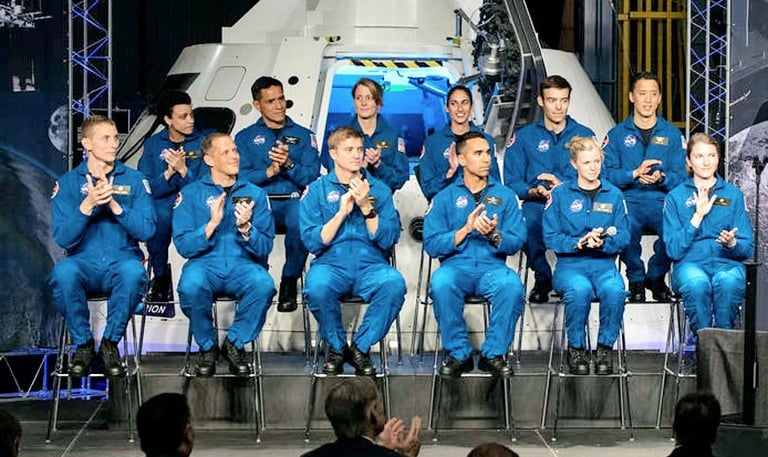
ASTRONAUT SELECTION AND POTENTIAL RISK MANAGEMENT: PSYCHOLOGICAL TRAUMA AND RESILIENCE FOR MARS SPACE MISSION By David W. Kim
https://kirj.ee/wp-content/plugins/kirj/pub/Trames-3-2024-211-236_20240825124645.pdf
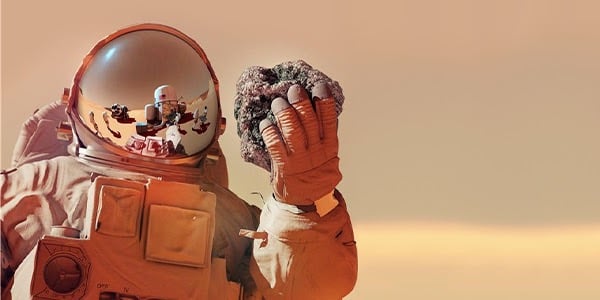

Professor Caldwell Helps Shape Future of Human Mars Exploration
We are delighted to announce that our esteemed US colleague, Professor Barrett Caldwell, has participated in the research and publication of the US National Academies' Science Strategy for Human Exploration of Mars report.
Professor Caldwell served as panel co-chair (Human Factors Lead) for the Biological and Physical Sciences and Human Factors Panel, contributing his expertise to this landmark committee report that will help shape the future of human space exploration.
This comprehensive strategy report represents years of collaborative work by leading experts to identify the critical scientific questions and research priorities needed to enable safe and successful human missions to Mars.
We extend our warmest congratulations to Professor Caldwell on this significant achievement and his continued contributions to advancing human space exploration.
Image courtesy of the National Academies of Science, Engineering and Medicine
Ashok N., Kinra P., Tyagi P., Dutta V. Indian Journal of Aerospace Medicine 56,1.
Study of Simulated Microgravity on Immunological Parameters
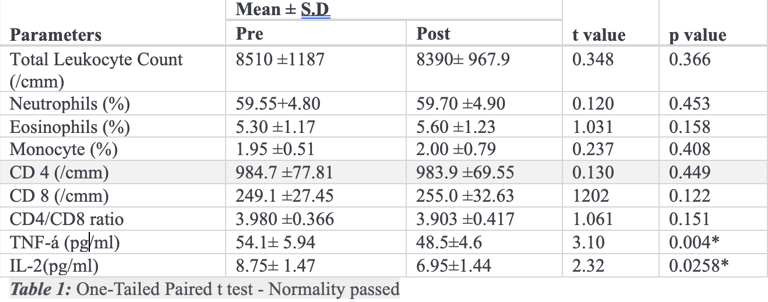
Spaceflight results in immunosuppression, likely due to neurohumoral factors released in response to intermittent stress during flight. However, no major non-physiological health problems have been reported during or following spaceflight; however, diseases resulting from immunosuppression could occur on long-duration missions and include bacterial, fungal, and viral infections, as well as an increased incidence of neoplasia and autoimmunity. Studies have shown impairment of cell-mediated, humoral, and innate immune variables in blood samples from astronauts who have flown a space mission. This study examined the immunological parameters in healthy adults before and after simulated microgravity. 20 healthy adult male volunteers were subjected to simulated microgravity for 6 hours using a dry flotation tank.
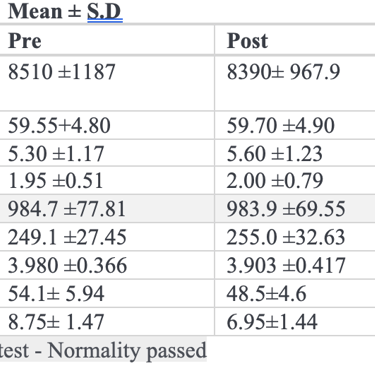
The immunological parameters were analysed using blood samples collected pre- and post-exposure to simulated microgravity. The parameters included: total leukocyte count, differential leukocyte count, CD4 count, CD8 count, CD4/CD8 ratio, and serum IL-2 (an adaptive immune cytokine) and TNF-α (an innate immune cytokine) levels. There was no statistically significant change in the CD4 count, CD8 count or CD4/CD8 ratio. However, there was a substantial reduction in serum TNF-α (p=0.004) and IL-2 (p=0.0258). This experiment showed a mild decrease in cell-mediated immunity and in cytokines involved in innate immunity. The paper further recommends possible countermeasures to reduce this problem and how to investigate a pilot with signs of immunosuppression systematically.
More details: https://indjaerospacemed.com/study-of-simulated-microgravity-on-immunological-parameters/
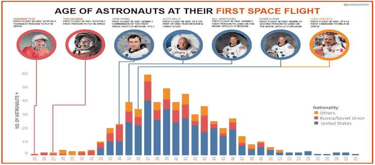
Gender Policy and Couple Astronauts: Confinement and Resilience Countermeasures in Deep Space Exploration By David W. Kim
How is Gender Policy for Future Astronauts?
Space science has been developed with a long-term perspective beyond missions in Earth orbit, the International Space Station (ISS) and Shenzhou. While space tourism is a commercial project, NASA’s SpaceX is considering innovative missions for the moon station and Mars in the 2030s. The major hazards of radiation, microgravity, distance from Earth and hostile environments will be technologically addressed for the biological and physiological safety of human spaceflight. However, prolonged isolation in space was not the key issue of past missions; nevertheless, it critically affected psychological and behavioural changes. How can we enhance future astronauts’ mental well-being? What methodology would be efficient for outer space travel? Are space agencies’ gender policies still valuable? If not, how can they be reconsidered in risk management?
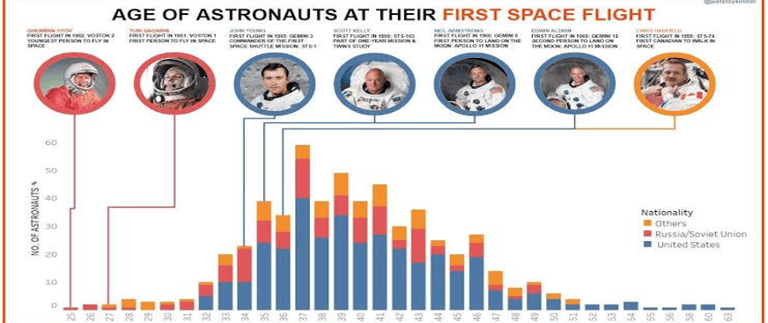
Since insecurity illogically leads to the internal circumstances of solitude, fear, anxiety, low morale, negativity, unwillingness and longing for family, this research explores the significance of spaceship community life in the context of gender equality. The physiological characteristics of future astronauts (around late twenties to early forties) are evaluated in relation to sexual nature for 2.5–3 years. The paper presents a feasible hypothesis that, in the secure systems of STEM and medical environments, applying the ‘couple astronaut theory’ could serve as an alternative countermeasure to enhance the resilience, safety, and success of deep space exploration.
https://informaticajournal.com/informatica/index.php/pdf/stream/AiEfx/1749354756
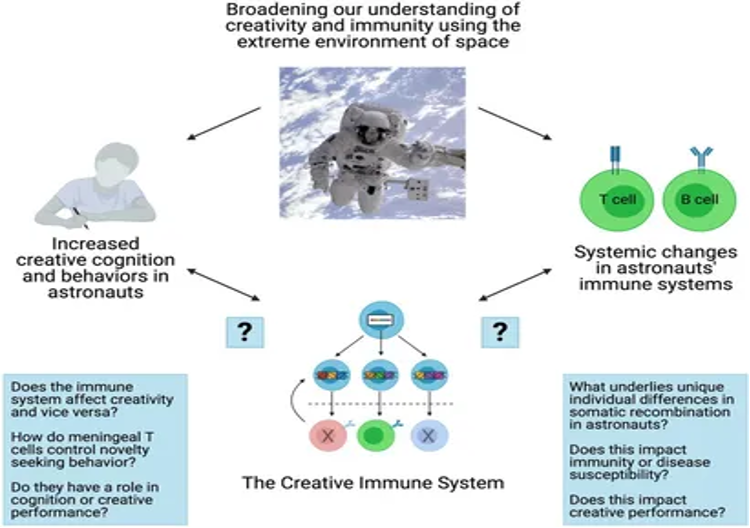
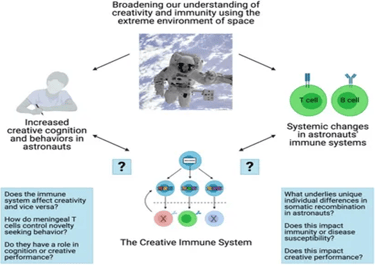
“How the Immune System Deploys Creativity: Why We Can Learn From Astronauts and Cosmonauts.” by Henderika de Vries and William Khoury-Hanold
In Front. Psychol. 12 (2021):582083. doi: 10.3389/fpsyg.2021.582083
The Immune System of Astronauts with Creativity
In this interdisciplinary article, the authors investigate the relationship between creativity and the immune system, the creative features of the immune system and how the immune system and its role in regulating homeostasis might be related to creative cognition. They argue that within a multivariate approach of creativity, the immune system is a contributing factor. New directions for research are also discussed. When astronauts and cosmonauts venture into the new and extreme environment of outer space, their immune system needs to instantly adapt and find new answers to survive biologically and psychologically. Many astronauts report interest in creative activities and therefore represent an interesting group to investigate creativity in relation to the immune system. Little is known regarding (1) how the immune system interacts with and supports creative cognition and behavior, (2) if an individual’s immune system, interacting with cognition, adapts more originally to a new environment compared to another’s; in other words, if there is creativity in the domain of the immune system, and (3) the creative properties and functions of the immune system itself.
Given that the concepts of creativity and the immune system might not be familiar to those who study one but not the other, this paper begins by defining these concepts. Next, the authors argue that these seemingly lightyear distant concepts are actually closer than previously thought. They will discuss the connections between illness, the immune system and creativity and propose that the essence of illness is the experience of Unheimlichkeit, which is the sense of “uncanniness” or “unhomelikeness” in one’s own body and in the world (Svenaeus, 2000). Finally, the paper extends the framework of Unheimlichkeit to the extreme environment of space and discusses what can be learnt about creativity from astronauts.
https://www.frontiersin.org/journals/psychology/articles/10.3389/fpsyg.2021.582083/full
News & Events
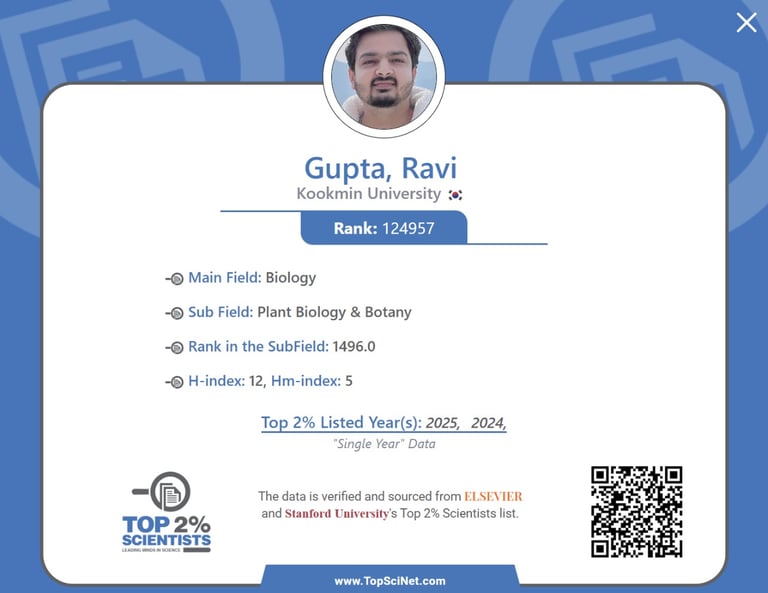
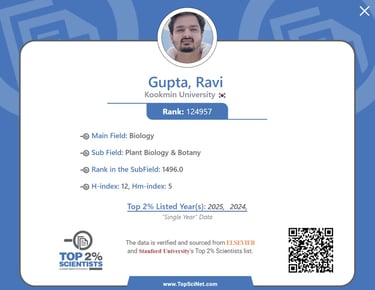
Dr. Ravi Gupta Recognized Among Top Biology Scholars Worldwide
We are pleased to share that Dr. Ravi Gupta, one of our founding members, has been recognized as one of the top 2% scholars in biology worldwide for both 2024 and 2025. This recognition, based on citation metrics and research impact analysis, acknowledges researchers who have made meaningful contributions to their fields.
The ranking evaluates scientists based on their scholarly work and its influence within the research community. Dr. Gupta's inclusion reflects his consistent dedication to advancing biological research and his commitment to scientific inquiry over the course of his career.
.https://topscinet.com/scientist_profile/Gupta,%20Ravi/2012/?stype=single_year
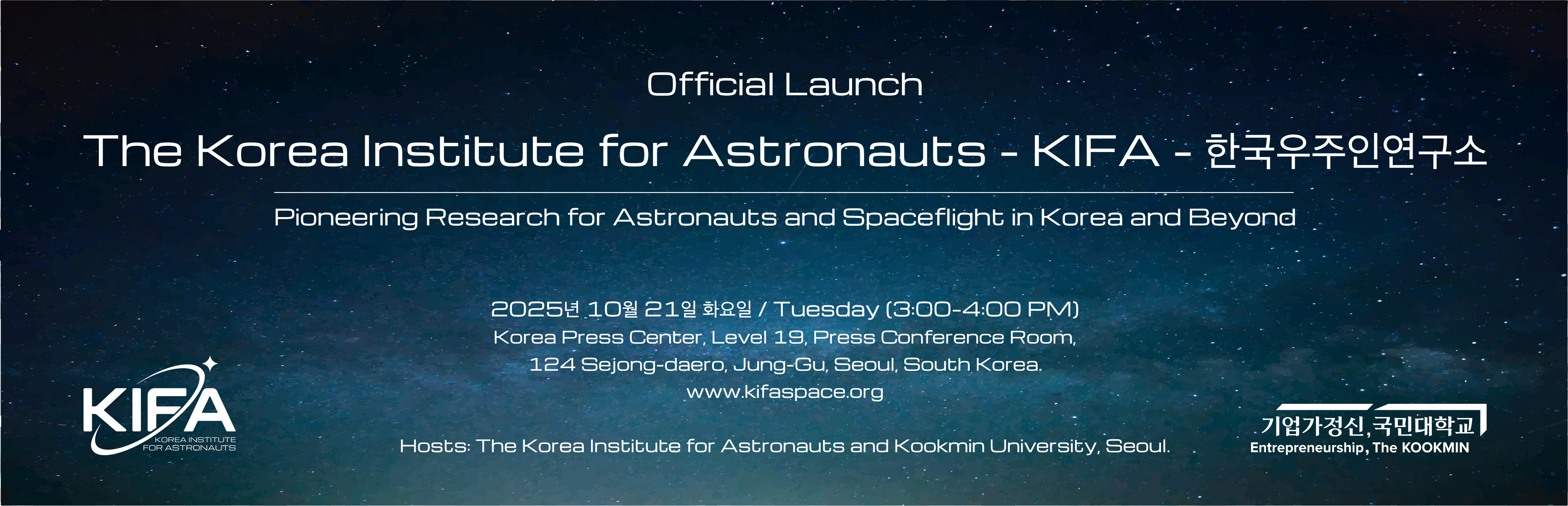
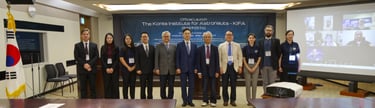
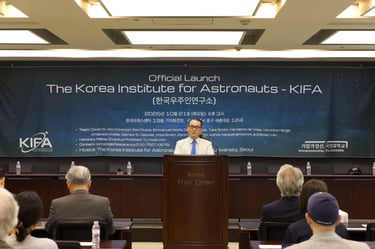
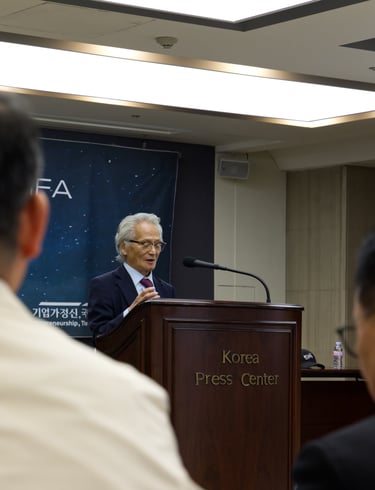
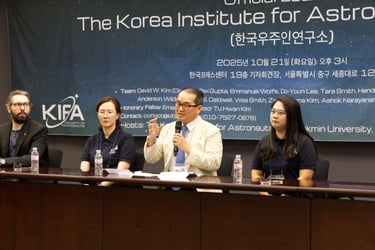
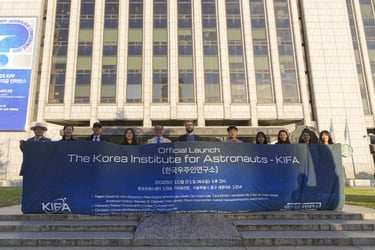
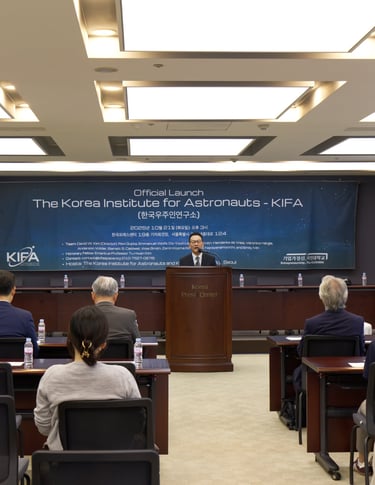
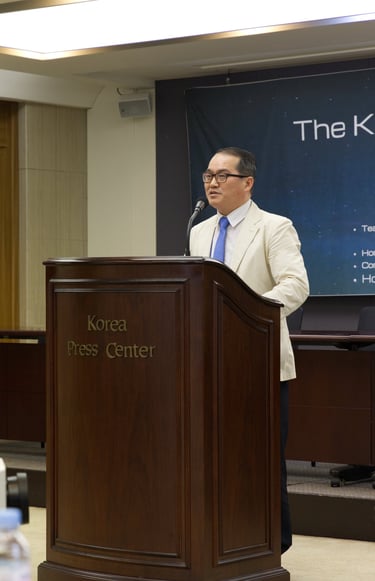
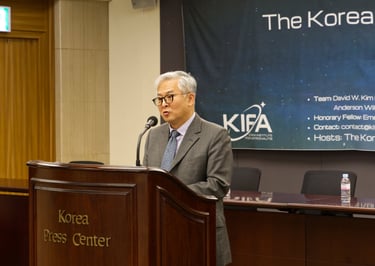
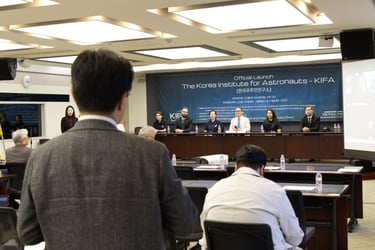
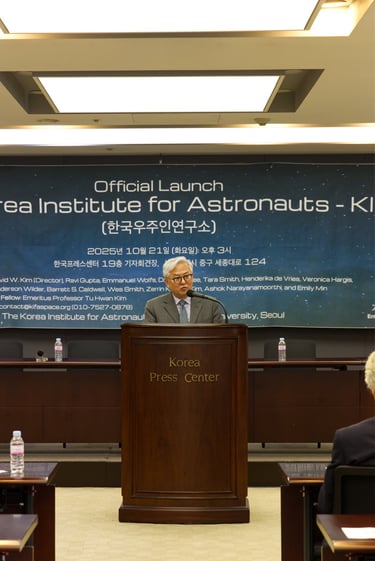
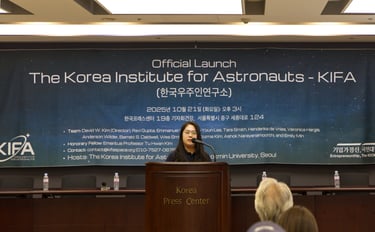
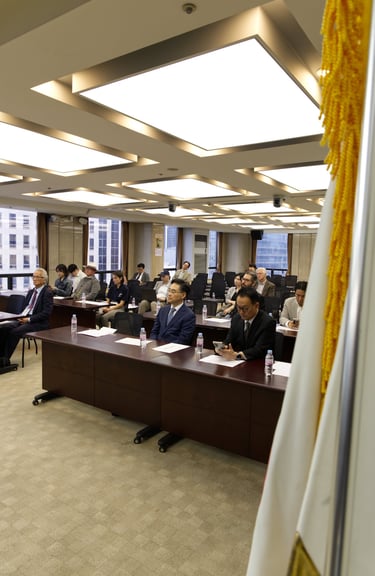
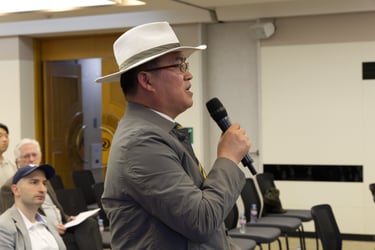
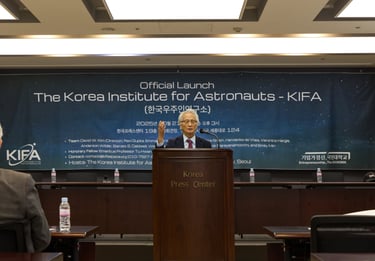
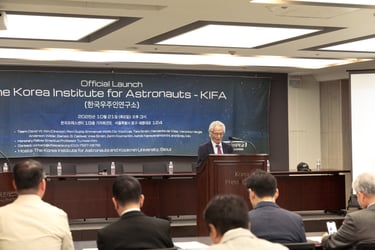
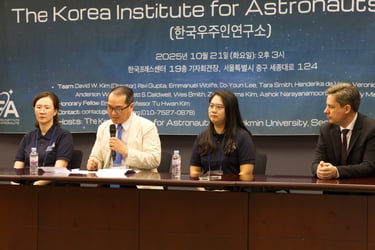
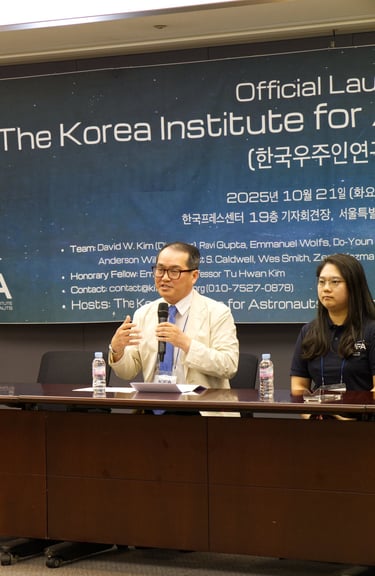
한국우주인연구소(KIFA)는 2025년 10월 21일 화요일 서울 프레스센터에서 공식 출범했으며, 이는 대한민국의 유인 우주비행 연구 발전에 대한 의지를 보여주는 중요한 이정표가 되었습니다. 출범식에는 전 세계의 저명한 학자, 연구자, 우주 탐사 옹호자들이 한자리에 모여 대한민국의 우주 연구 분야 확대에 대한 강력한 국제적 관심을 드러냈습니다.
이날 행사에서는 학계와 우주 연구 분야의 주요 인사들의 감동적인 연설이 있었습니다. 국민대학교 김도연 부총장은 개회사를 통해 한국의 과학 미래에 있어 본 연구소의 전략적 중요성을 강조했습니다. 대한민국 우주 연구 분야의 가장 원로이자 존경받는 학자 중 한 분인 김두환 명예교수는 수십 년간의 선구적인 연구 경험에서 얻은 통찰력을 공유했습니다. 옥스퍼드 대학교의 가다 알살레 교수는 협력적 우주 연구 기회에 대한 국제적 관점을 제공했으며, 김대윤 소장과 이도연 공동소장은 유인 우주비행 분야의 선구적 연구를 위한 KIFA의 비전과 연구 우선순위를 설명했습니다. 에밀리 민이 행사 진행을 훌륭하게 맡았습니다.
이번 출범식은 여러 대륙의 연구자들이 참여하여 KIFA의 국제적 영향력을 보여주었습니다. 현장 참석자로는 KIFA 공동소장 엠마누엘 볼프스와 최설별 스텔라 연구원, 웨슬리 C. 스미스, 제린 코즈마 김 등이 있었습니다. 화상으로는 라비 굽타 공동소장과 호주의 타라 스미스, 룩셈부르크의 헨데리카 데 브리스, 미국의 앤더슨 와일더와 배럿 S. 콜드웰, 인도의 아쇼크 나라야나무르티가 참여했습니다.
본 연구소는 이미 전 세계 기업과 연구 기관들로부터 상당한 관심을 받고 있으며, 많은 이들이 대한민국의 우주 연구 역량 발전을 위한 협력과 기여를 희망하고 있습니다. KIFA의 설립은 대한민국을 신흥 유인 우주비행 연구와 국제 협력의 중심지로 자리매김하게 합니다.
KIFA 및 파트너십 기회에 대한 자세한 정보는 kifaspace.org를 방문하시기 바랍니다.